What Is a Hero Shot? Choosing the One Image That Sells a Dish
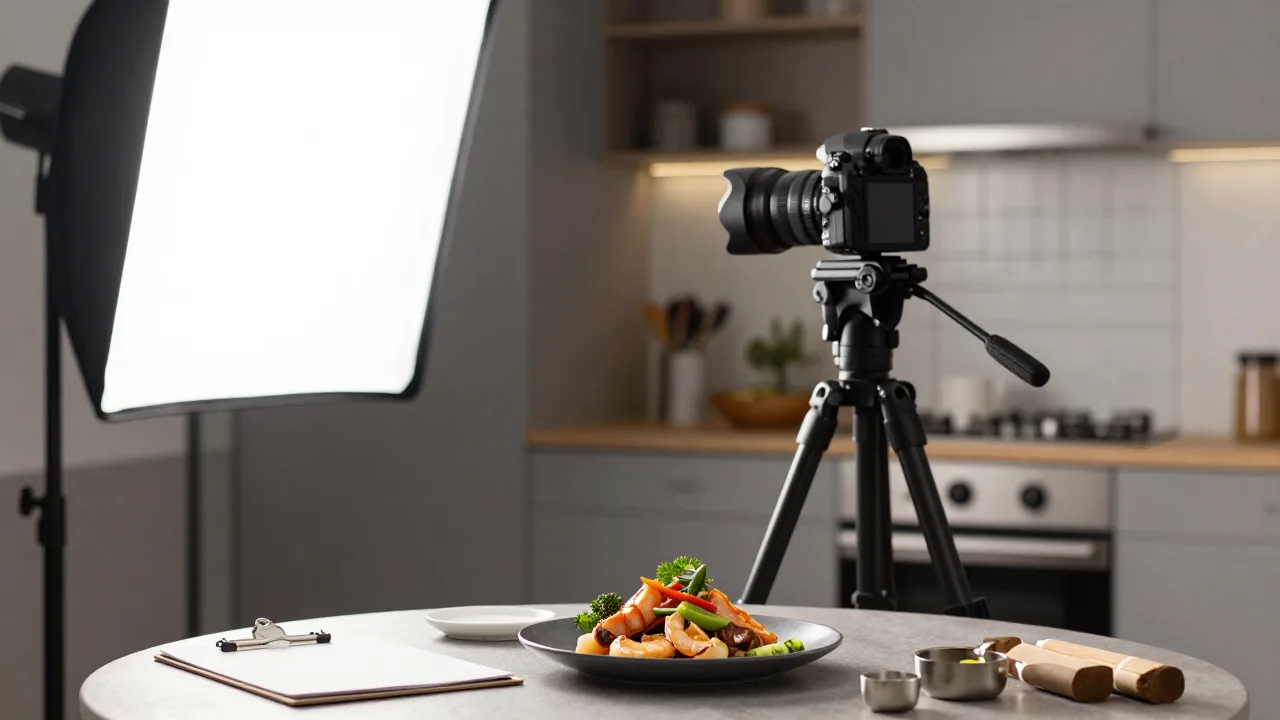
Every dish on your menu has exactly one photo doing most of the work. Not the gallery, not the behind-the-scenes shot, not the moody detail of the sauce spoon. One image, usually a small rectangle on a phone screen, decides whether a customer taps the item or scrolls past it. That image is the hero shot, and choosing it badly is one of the most expensive quiet mistakes a restaurant can make.
The term comes from advertising, where the "hero" is the product image the entire campaign is built around. In food, the definition tightens: a hero shot is the frame that makes a dish instantly identifiable and instantly wanted, at whatever size the platform gives you. It is not necessarily the prettiest photo from the shoot. It is the most legible one.
Why the Hero Shot Is a Different Job From "a Good Photo"
Plenty of restaurants have a folder full of good photos and still have a menu that underperforms. The gap is almost always a selection problem rather than a shooting problem. A photo that looks stunning at full width on a laptop can be unreadable at 160 pixels wide inside a delivery app, and 160 pixels wide is where the actual purchase decision happens.
Think about the three constraints a hero shot has to survive:
- It gets shrunk. Delivery marketplaces, digital menu boards, and online ordering tiles all render your image small. Fine detail disappears; shape, color, and contrast are all that survive.
- It gets cropped. One platform wants 16:9, another wants square, another wants 4:5 for a vertical feed. If your composition only works in the exact frame you shot, it breaks the moment someone else's template crops it.
- It gets a fraction of a second. Customers scroll a menu the way they scroll anything else. If the dish does not resolve into "oh, that looks good" almost immediately, it never gets a second look.
Here is the useful reframe: you are not picking the photo you love. You are picking the photo that still works after the internet has finished mangling it.
Hero shot vs. supporting shots
A complete dish shoot produces two categories of image. The hero carries identity -- it answers "what is this?" and "do I want it?" in one glance. Supporting shots add texture and story: the close-up of the cheese pull, the hands tearing bread, the ingredient flat-lay, the wide table scene. Supporting shots belong on your website, in social posts, and in email. They almost never belong in the menu slot.
Confusing the two is common. A gorgeous artistic crop of one corner of a plate makes a beautiful Instagram post and a terrible menu tile, because a customer scanning eleven items cannot tell what they are looking at. Planning both categories up front is exactly what a proper food photography shot list is for -- it forces you to allocate frames to identity and frames to atmosphere instead of hoping one image does both.
The Five Tests a Hero Shot Has to Pass
When you are sitting in front of 18 frames of the same short rib and cannot decide, run them through these five filters. They are ruthless and they are fast.
1. The thumbnail test
Shrink the candidate to about 150 pixels wide -- on a phone, that is roughly the size of your thumbnail. Can you still tell what the dish is? Does the hero ingredient still read? If the answer is no, the frame is out, no matter how good it looks large. This single test eliminates more candidates than the other four combined.
2. The identity test
Cover the menu text with your hand. Looking only at the image, could a first-time customer name the dish within about a second? A birria taco should read as a birria taco, not as a generic pile of meat. If the photo needs the caption to make sense, it is not doing hero work.
3. The freshness test
Food photographs age fast. Look for the cues that say "made three minutes ago": glossy sauce, crisp herb edges, visible steam, a clean plate rim, cheese that is still stretching rather than congealing. A wilted garnish or a dulled sauce surface registers subconsciously even when the viewer cannot articulate why the photo feels off.
4. The crop test
Overlay a square crop, a 4:5 crop, and a 16:9 crop on the frame. Does the dish survive all three? A hero shot needs breathing room on the edges precisely so it can be recropped without amputating the plate. If your best frame only works at one aspect ratio, either reshoot looser or accept that you will need platform-specific alternates.
5. The honesty test
Does the photo look like what arrives at the table? An over-styled hero shot buys you one order and costs you a review. The strongest hero images are the real dish on its best day -- correctly plated, correctly portioned, shot within minutes of leaving the pass.
Make Every Hero Shot Look Studio-Grade
KwickPhoto's AI corrects color casts, lifts flat lighting, and cleans backgrounds so the frame you picked as your hero actually looks like a hero.
Try KwickPhoto FreeShooting for the Hero: Angle, Height, and Framing
You cannot select a great hero shot from a set that does not contain one. The good news is that generating strong candidates is mostly about covering three angles deliberately rather than shooting fifty random frames.
Let the food's shape choose the angle
This is the rule that solves most angle debates before they start:
- Overhead (90 degrees): flat, wide, or circular food. Pizza, poke bowls, salads, sheet-pan dishes, charcuterie, ramen viewed into the bowl. Overhead flattens height, which is fine when there is no height to lose.
- Forty-five degrees: the workhorse. Most plated entrees, pasta, curry with rice, breakfast plates. It matches the angle a seated diner actually sees, which is why it feels natural and appetizing.
- Straight-on (0 to 20 degrees): tall, layered, stacked food. Burgers, club sandwiches, layer cake, pancake stacks, parfaits, tall drinks. Shooting a burger from above turns a beautiful cross-section into a photo of a bun.
Shoot all three for each dish anyway. It costs about ninety seconds per plate and it means the selection round has real choices in it. The frame you assume will win is not always the frame that survives the thumbnail test.
Fill the frame, then back off ten percent
The most common amateur hero shot is too far away. The dish sits marooned in a sea of table, and at thumbnail size it becomes a speck. Move in until the plate nearly fills the frame, then pull back just enough to leave crop margin on all four sides. That margin is what lets one master file become a square tile, a vertical story, and a wide banner.
Give the eye one entry point
Strong hero shots have a single obvious focal point: the runny yolk, the seared crust, the sauce pool, the garnish. Everything else supports it. When three elements compete for attention the image reads as busy and the viewer moves on. The classic framing devices -- rule of thirds, leading lines with cutlery, diagonal plating -- exist to funnel attention, and they are covered thoroughly in our guide to food photography composition rules.
Style for the camera, not for the table
Turn the best-looking side of the dish toward the lens. Wipe the rim. Place the garnish last so it is at peak freshness. Angle the protein so its texture catches the light rather than facing away from it. None of this is deception -- it is the same instinct as combing your hair before a portrait.
Example scenario: a 62-seat South Indian restaurant reshooting its signature dosa
Illustrative scenario — a composite example built to show how the numbers work. It does not describe a real business or customer.
Consider a 62-seat South Indian restaurant in Sugar Land, Texas whose ghee roast dosa is the dish the owner is proudest of. On the online ordering page, it is also the seventh-best seller out of nine mains.
The existing photo is taken from above because that is how everybody says to shoot food. From above, a dosa is a beige circle. It looks like a giant pancake nobody asked for.
The dosa's entire appeal is its height and its crackle -- a tall golden cone, shatteringly crisp, with the chutney and sambar beside it. Overhead framing destroys exactly the qualities that make people order it. Suppose that in May 2026 the owner reshoots it in about twenty minutes on a slow Tuesday: straight-on at plate level, backlit by the front window, dark slate behind, shot within ninety seconds of it hitting the pass.
Straight-on, the crisp edges and the steam coming off it are visible. It is the version of the dish servers describe to guests. That is the shot.
She replaces the image on the website, online ordering, and two delivery apps in a single afternoon, leaving the price and menu position untouched. Over the following six weeks in this example, the ghee roast dosa moves from seventh to third among mains, with orders up 31% against the prior six-week baseline.
Same dosa. Same $16.50. The only difference is that people can finally see why it is worth ordering.
Choosing the Hero: A Repeatable Selection Process
Selection deserves as much discipline as shooting. Here is a process that takes about four minutes per dish and removes most of the second-guessing.
- Cull to five. First pass, delete anything with obvious technical problems -- soft focus, blown highlights, a bad color cast, a stray thumb in frame. You should be down to roughly five candidates fast.
- Run the thumbnail test. View all five at phone-tile size, side by side. Typically two survive with real clarity.
- Compare against the neighbors. Put each finalist next to the hero shots of the dishes above and below it on the menu. If everything on the page is shot at 45 degrees on white marble, a lone dark overhead shot will look like an error rather than a highlight.
- Check the crops. Apply square, 4:5, and 16:9 to each finalist. Eliminate anything that loses the plate.
- Pick and name it. Save the winner with a predictable filename --
dish-name-hero.jpg-- and keep the runner-up asdish-name-alt.jpg. Future you, updating the delivery app at 11pm, will be grateful.
One point that trips people up: the hero shot is a menu-wide decision, not a per-dish one. A menu of twenty individually excellent photos shot in twenty different styles looks worse than twenty merely good photos shot consistently. Consistency signals that a professional runs this restaurant. Chaos signals the opposite, no matter how nice any single frame is.
Where the Hero Shot Actually Earns Its Money
Once selected, the hero image should appear in exactly the places where someone is deciding whether to buy:
- Online ordering and delivery tiles. The highest-value slot. This is where a strong hero converts a browser into an order, and where menu photos lift sales most measurably.
- Digital menu boards and QR menus. Small screens, fast decisions, high traffic.
- Google Business Profile. Your hero shots are what appear in local search results and Maps, often before anyone reaches your site at all.
- Paid ads and retargeting. Ad platforms crop aggressively, which is why the crop test earlier is not optional.
- Third-party listings and aggregators. Supply your own hero images or the platform will pick a customer photo for you, and customer photos are rarely flattering.
Restaurants that treat this as one system rather than five separate chores get compounding returns -- the same principle behind a coordinated approach to restaurant food photography across every customer touchpoint. One shoot, one selection round, one consistent set deployed everywhere. If you are starting from scratch and want a benchmark for what "good enough to be a hero" looks like in 2026, it is worth studying a current round-up of what the strongest menu photos look like this year before you shoot.
Common Hero Shot Mistakes
- Choosing the artiest frame. Beautiful and legible are different criteria. Hero slots reward legible.
- Shooting only one angle. With one angle, you are not selecting a hero -- you are accepting one.
- Cropping so tight there is no margin. The first platform that wants a different aspect ratio will cut into the plate.
- Mixing styles across the menu. Inconsistency is more visible than any individual weakness.
- Letting hero shots go stale. If the plating changed, the portion changed, or the garnish changed, the photo is now a promise you no longer keep.
- Never revisiting the decision. Hero shots are testable. Swapping one and watching the item's order share for a month is one of the cheapest experiments in the building.
The Bottom Line
A hero shot is not the best photo from the shoot -- it is the photo that keeps working after it is shrunk to a thumbnail, cropped by someone else's template, and given half a second of attention on a crowded screen. Shoot three angles per dish, cull hard, test at tile size, and hold the whole menu to one visual style.
The economics are unusually friendly here. Selecting a better frame from photos you already took costs nothing, and on a mid-menu item that was quietly underperforming, the difference shows up in order counts within a month. Pick the image that makes the dish unmistakable, deploy it everywhere the decision happens, and let it work.
One Consistent Look Across Your Entire Menu
KwickPhoto is part of KwickOS, the all-in-one platform for restaurants. Batch-process your hero shots for uniform color and contrast, then push them straight to your menus, ordering pages, and delivery listings.
Get Started at KwickOS.comFrequently Asked Questions
What is a hero shot in food photography?
A hero shot is the single lead image chosen to represent a dish everywhere it appears -- menu, website, delivery app, and ads. It shows the dish at its most recognizable and appetizing, framed so the main ingredient reads instantly at thumbnail size, and it does the selling work that supporting photos cannot.
How many photos do I need before I can pick a hero shot?
Shoot 12 to 20 frames per dish across three angles -- overhead, 45 degrees, and straight-on -- then choose one. That range is small enough to finish a 20-item menu in a morning and large enough that you are selecting the best frame rather than settling for the only frame you took.
What angle works best for a hero shot?
Match the angle to the food's shape. Flat, wide dishes like pizza, bowls, and salads photograph best from directly overhead. Tall, layered items like burgers, stacked pancakes, and parfaits need a straight-on or low angle. Most other plated food looks best at roughly 45 degrees, which mimics the diner's own view.
Should the hero shot be the same image on every platform?
It should be the same photograph, but exported in different crops. Delivery apps use wide 16:9 or 4:3 tiles, Instagram favors square or 4:5, and menu thumbnails are often small squares. Shoot loose enough to crop all of these from one master file so the dish looks identical everywhere a customer meets it.
How do I know if a hero shot is working?
Track the item's order count and share of category for four to six weeks before and after the photo goes live, holding price and placement steady. A working hero shot usually moves the item's order share by a measurable amount within the first month, and the effect is largest on items customers were previously scrolling past.