Menu Photo Localization: One Menu, Many Markets
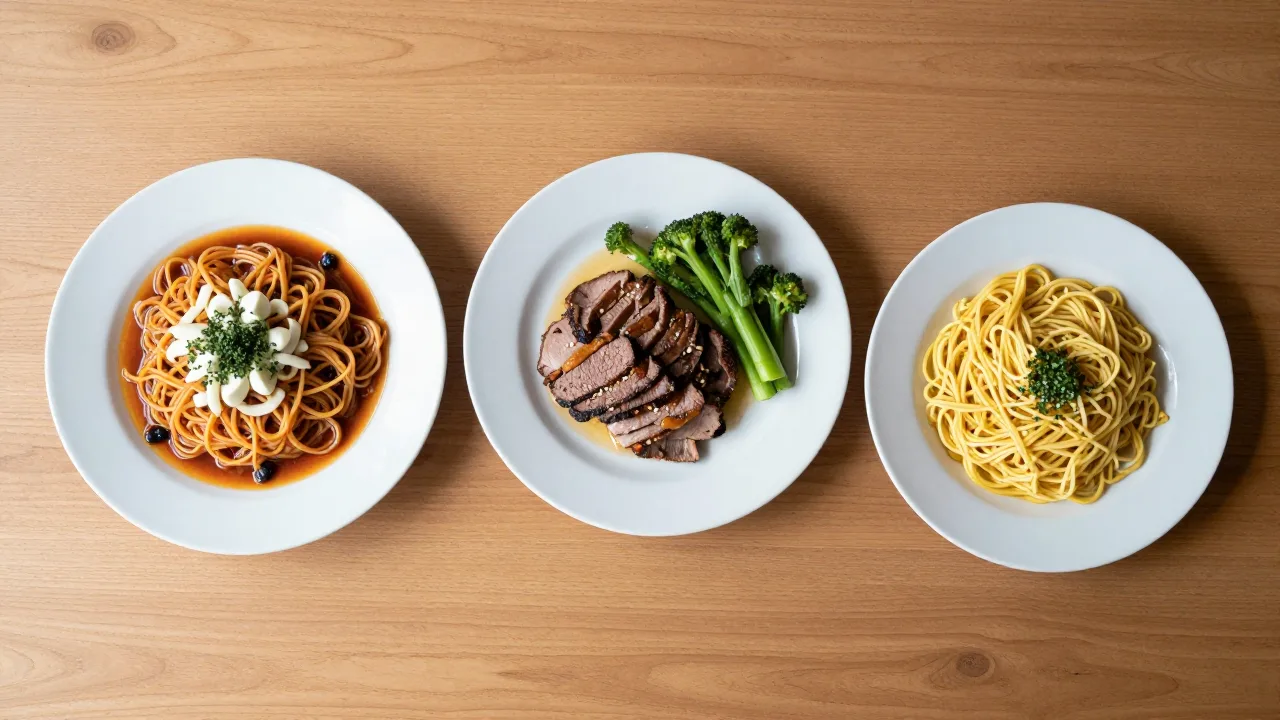
Two locations of the same brand, forty minutes apart, running the identical online menu with the identical photos. One sells the lamb plate at roughly 9% of dinner orders. The other sells it at 3%. Same price, same recipe card, same picture. Something in that picture is working in one neighborhood and failing in the other.
This is the part of multi-location photography almost nobody plans for. Brands invest in one excellent shoot, push the results to every location, and treat the job as finished. It is a reasonable instinct -- consistency is genuinely valuable, and a shared library is far cheaper than shooting each store. But a photograph is not a neutral record of a dish. It is a promise about portion size, spice level, side dishes, plating, and even who the food is for. Those promises land differently in different markets.
Left alone, the mismatch costs you twice. In markets where the photo overpromises, you get orders followed by disappointment and mediocre reviews. In markets where it underpromises or looks unfamiliar, you get no orders at all -- which is worse, because it is invisible. Nobody writes a review about the dish they scrolled past.
The fix is not "shoot everything everywhere." It is a targeted discipline: lock the brand's visual grammar hard, then let a small, controlled set of variables move by market.
What Actually Varies Between Markets
Before deciding what to reshoot, it helps to be precise about the ways a single dish photo can go wrong across a footprint.
The plate genuinely differs
This is the most common and most fixable case. Regional supply chains, local supplier substitutions, and kitchen-level recipe drift mean the dish in Houston is not plated identically to the dish in Phoenix. Different rice, a different chili, a garnish the local produce vendor cannot supply consistently. When the photo shows a garnish that store has never had, every guest who ordered it notices.
Portion expectations differ
Portion norms are strongly regional. The same bowl reads as "generous" in one market and "small for the price" in another. Photography can adjust this honestly -- shooting at a slightly lower angle emphasizes depth and volume, while an overhead shot on an oversized plate makes the same portion look sparse. You are not changing the food; you are choosing which true impression the frame gives.
Familiarity differs
In a market where a dish is a staple, the photo's job is to prove quality: show the char, the crumb, the crisp edge. In a market where the dish is new to most customers, the photo's job is to explain: show it in context, with the sides, with a hand or utensil for scale, so a first-timer understands what arrives. The same beautiful close-up that reassures one audience baffles another. This is exactly the tension explored in our main-site piece on marketing an ethnic restaurant to crossover audiences -- the image has to work for the regular and the newcomer at once, or it has to be split.
Daypart and occasion differ
A downtown location selling to office lunch traffic and a suburban location selling to families on Friday night are photographing the same menu for two different occasions. Single-serve framing, one plate, clean background works for the first. Shared framing -- multiple dishes, a table scene, hands reaching -- works for the second.
Platform mix differs
Some markets are delivery-heavy, others are dine-in-heavy. Delivery photos have to survive small tiles, aggressive crops, and side-by-side comparison with competitors, which pushes toward tighter, higher-contrast framing. Our guide to optimizing photos for delivery apps covers those constraints in detail, and in a delivery-dominant market they should drive the localized variant.
Lock the Grammar, Vary the Contents
Here is the principle that keeps localization from turning into chaos. Split every photo decision into two buckets.
Brand-locked (never varies):
- Camera angle rules by food shape -- overhead for flat, 45 degrees for plated, straight-on for stacked
- Lighting direction and quality -- for instance, always soft light from the upper left
- Background palette -- the two or three approved surfaces
- Color treatment -- white balance target, saturation ceiling, contrast curve
- Crop ratios and safe margins for every platform
- Negative space and where the dish sits in the frame
Market-variable (may differ):
- The specific plated version of the dish, when the recipe genuinely differs
- Garnish, when local supply differs
- Props and utensils that signal local dining culture
- Whether the shot is single-serve or shared-table framed
- Which items get photographed at all, when the menu differs by region
Do it this way and the whole library still reads as one brand. Put two localized variants side by side and they look like siblings -- same light, same surface, same color, different plate. That is the outcome you want. The failure mode to avoid is the opposite: identical contents shot in wildly different styles, which is what happens when each location shoots its own photos with no rules. Our guide to brand consistency in food photography is essentially the manual for writing that locked half of the list.
Keep Every Market On the Same Visual Standard
KwickPhoto applies one color and contrast profile across every location's images, so localized variants still look like they came from a single shoot.
Try KwickPhoto FreeDeciding What to Localize: The 80/20 Rule
Localizing an entire menu for every market is unaffordable and unnecessary. In practice, 10% to 20% of items carry nearly all of the benefit. Here is how to find them.
- Pull order-share by item, by location. Not raw counts -- share of category, so a busy store does not drown out a quiet one. You are looking for spread.
- Flag the widest spreads. Any item where the best and worst locations differ by more than about 2x in share is a candidate. Some of that is demographics and nothing to do with photos, but it is where photo mismatches hide.
- Audit against reality. For each flagged item, ask the low-performing kitchen to plate it and send you a phone photo. Compare it to the library image. Mismatches in portion, garnish, sides, and color show up immediately.
- Check refund and complaint tags. "Not as pictured" is the single clearest signal that a localized variant is overdue. Even a handful of these on one item at one store justifies a reshoot.
- Add regional exclusives. Any item that only exists in some markets automatically needs its own photo, because the master library never had one.
Run that list and most brands end up with a manageable set: perhaps 8 to 15 dishes across the footprint that need a localized variant, plus a handful of regional exclusives. That is one or two shoot days, not a campaign.
Building the Localized Library Without Losing Track
The operational risk in localization is not photography. It is file management. The moment one dish has three approved images, somebody will publish the wrong one.
A naming and structure convention solves this cheaply:
- Master files use a plain slug:
lamb-plate-hero.jpg. - Localized variants append a market code:
lamb-plate-hero-tx-htx.jpg,lamb-plate-hero-az.jpg. Market codes, not store numbers -- stores churn, markets do not. - One folder per market, containing only that market's overrides. Anything not in the folder falls back to master.
- A single mapping table -- item, market, image path, last updated -- that is the source of truth for what publishes where.
That last point is the one that saves you. With a mapping table, adding a location to an existing market is a one-line change and nobody has to remember which store got which picture. Without it, localization degrades into a shared drive nobody trusts within about six months.
The same fallback logic that makes this work for photos is what makes it work for the menu itself -- a master definition with market-level overrides. If you are already running that structure for pricing and item availability, your image mapping should mirror it exactly rather than living in a parallel system. Our main-site walkthrough of syncing menus across multiple locations lays out that master-plus-override pattern in full.
Example scenario: a nine-location Turkish fast-casual group with one dish, two markets, two photos
Illustrative scenario — a composite example built to show how the numbers work. It does not describe a real business or customer.
Consider a nine-location Turkish fast-casual group across Texas and Arizona whose mixed grill plate is the flagship item -- and whose performance varies wildly by market.
In the Texas stores it is 11% of dinner orders. In the Arizona stores it is under 4%. For two years the assumption is that it is just a different customer base.
Suppose an audit in February 2026 finds two separate problems. First, the Arizona kitchens plate the dish with a different pepper -- the produce supplier cannot get the long green peppers used in Texas -- so the photo shows a garnish those guests never receive. Second, and more consequential, the master photo is a tight 45-degree crop that assumes the viewer already knows what a mixed grill is. In Arizona, most guests do not.
In Texas the photo works because people are looking for their mixed grill and judging whether this one looks good. In Arizona people are looking at it and wondering what it is, how much food that is, and what comes with it.
The group shoots one localized variant: pulled back slightly, correct local pepper, the rice and flatbread visible in frame, a fork resting on the plate rim for scale. Same light, same surface, same color treatment -- only the framing and the contents change. It goes live on the Arizona stores' ordering pages and delivery listings in March.
Over the next quarter Arizona goes from under 4% to about 7% of dinner orders. Not Texas numbers, but no longer left on the table. And the not-as-pictured complaints go to zero.
In this example the group ends up running a master library with 11 localized variants across three market codes, all published through a single mapping table.
Localization for Franchise Systems
Franchised brands face a sharper version of the same problem. Franchisees are motivated, entrepreneurial, and armed with phones -- which means that in the absence of a system, they will make their own photos, and the brand's visual identity will quietly dissolve.
The workable arrangement is a permission structure rather than a prohibition:
- Brand supplies the master library covering the core menu, free to every franchisee.
- Franchisees may request a localized variant through a defined process when their plate genuinely differs -- with a phone photo of their actual plating as evidence.
- Local specials shot by franchisees must follow a one-page visual standard: angle by shape, approved backgrounds, natural light, no filters.
- Everything routes through one processing pass so color and contrast normalize regardless of who held the camera.
- The brand retains veto on anything published to third-party platforms, where images represent the whole system.
That last processing step is the quiet hero. Franchisee photos taken on eleven different phones under eleven different kitchen lights will never match by luck, but pushed through one consistent correction profile they land close enough that the menu looks intentional. We go deeper on running this at scale in our guide to food photography for franchise systems.
Mistakes to Avoid
- Localizing style instead of contents. If each market picks its own backgrounds and angles, you no longer have a brand. Vary the plate, never the grammar.
- Localizing everything. Most items do not need it. Chasing the full menu burns the budget before you reach the items that matter.
- No mapping table. Variants without a source of truth become mystery files nobody dares delete.
- Shooting variants at different times of year with different equipment. Even with locked rules, a shoot done in July and one done in December can drift. Shoot variants in batches and process them together.
- Ignoring the complaint data. "Not as pictured" is free, precise, market-level feedback and most groups never route it to whoever owns the photo library.
- Treating localization as a one-time project. Supply chains and recipes drift. Re-audit the flagged items annually.
The Bottom Line
A menu photo is a promise, and promises are read locally. When the plate genuinely differs by market, when portion expectations differ, or when the dish is a staple in one place and a discovery in another, one shared image cannot do both jobs well. It will quietly overperform in some markets and quietly fail in others, and the failures will never generate a complaint you can trace.
Localization done properly is narrow and cheap. Lock the angles, lighting, backgrounds, crops, and color treatment brand-wide so everything looks like one family. Then use order-share spread and "not as pictured" complaints to find the 10% to 20% of items where the picture and the plate have come apart, shoot targeted variants, and manage them through a single mapping table. One menu, many markets, one look -- and images that tell every customer the truth about what is coming.
Manage Menus and Images Across Every Location
KwickPhoto is part of KwickOS, the all-in-one platform for restaurant groups. Keep one master library, publish market-level overrides, and push the right image to the right store automatically.
Get Started at KwickOS.comFrequently Asked Questions
What is menu photo localization?
Menu photo localization is the practice of adapting a brand's dish photography for different markets -- adjusting portion presentation, garnish, props, styling context, and sometimes the dish variant shown -- so the image matches what customers in that specific market actually receive and expect, while keeping the overall brand look consistent.
Do I need different photos for every location?
No. Most multi-location brands need one master library plus a small set of localized variants -- typically 10 to 20 percent of the menu. Localize items where the recipe, portion, or spice level genuinely differs by market, and items that exist in only some regions. Everything else should use the shared master image.
How is menu photo localization different from translating the menu?
Translation changes the words; localization changes the visual promise. A translated menu can still show a photo with the wrong portion size, an unfamiliar side dish, or a garnish that market does not use. Because customers read the image before the text, an unlocalized photo can undercut a perfectly translated description.
Does localizing photos hurt brand consistency?
Not if you lock the visual grammar first. Fix the angle rules, background palette, lighting direction, crop ratios, and color treatment brand-wide, then allow local variation only in what is on the plate. The images will look like one family even when the contents differ market to market.
What is the cheapest way to start localizing menu photos?
Start with data rather than a camera. Pull the five items with the widest spread in order rate across your locations, and check whether the photo matches what each of those kitchens actually plates. Fixing mismatches on those few items usually delivers most of the available gain for the cost of one afternoon shoot.